

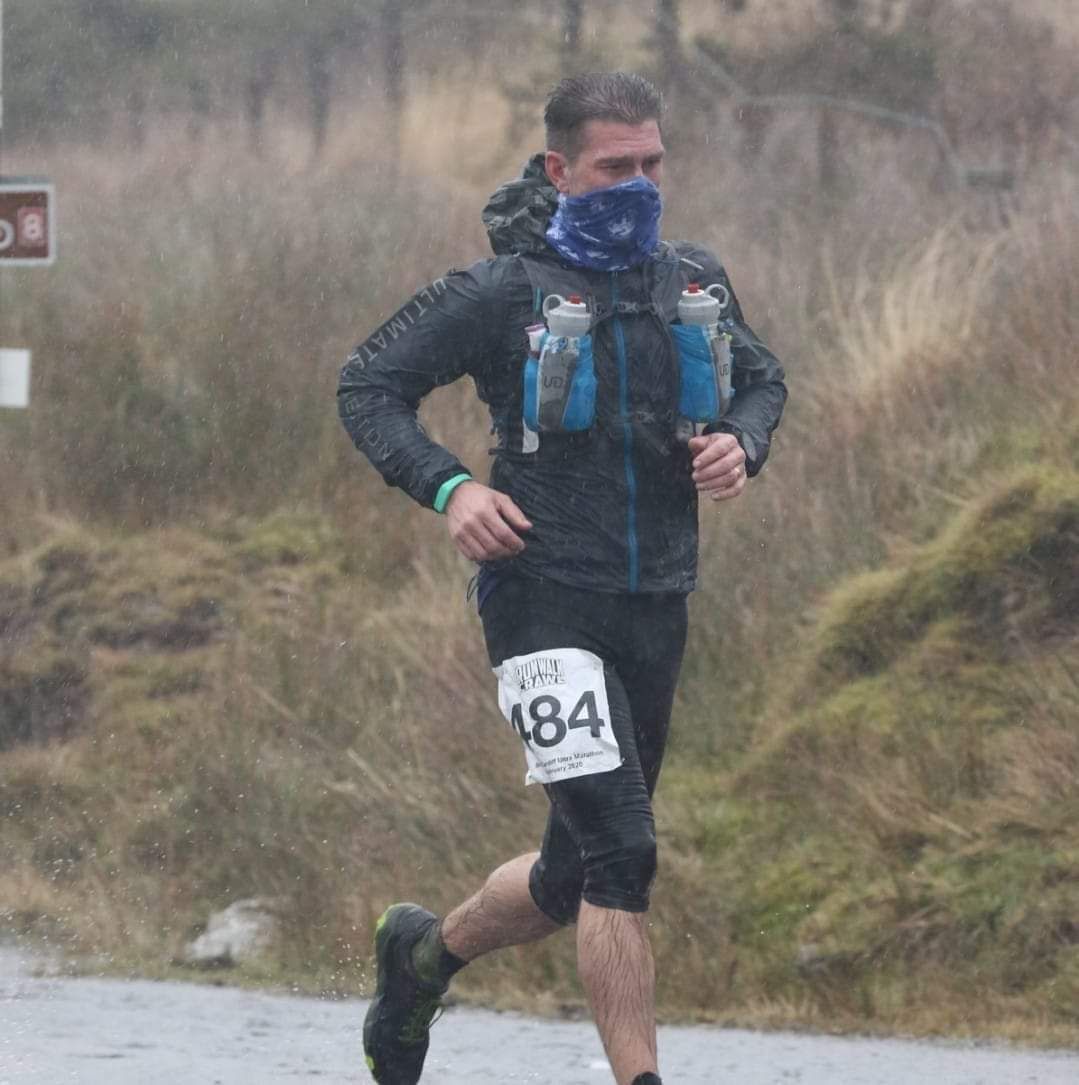
If you are searching for ultras in South Wales or trying to find the right ultra marathon in Wales, these five races offer very different tests: coastal paths, mountain climbs, a classic point-to-point route and a 200-mile endurance challenge. Here is how to choose the right one, from the perspective of an ultra running coach in South Wales who has run three of them.
TL;DR: The VOGUM and Rabbit Run Wales are sensible starting points for runners moving into ultra-distance. Brecon to Cardiff is the South Wales classic. OTT Ultra is a 30-mile mountain test, while Wild Horse South Wales 200 is a serious long-term project. Choose based on terrain, time limit, experience, which calls to you and the focus you can realistically give your training.
1. Brecon to Cardiff Classic: the home-turf classic
- Distance: 43 miles
- Route: Brecon to Nantgarw, following the Taff Trail
- Ascent: Approximately 1,200 metres
- Cut-off: 14 hours
- When: 14th February 2027
The Brecon to Cardiff Classic is one of the best-known South Wales trail races for good reason. It starts in the Bannau Brycheiniog and gradually works south towards Nantgarw, moving from upland paths and forestry tracks into the valley and cycle path sections.
I have run it, including in difficult February weather. The conditions can change the race completely. Cold rain, wind and muddy sections early on can leave you carrying more fatigue than expected before you reach Merthyr.
One detail matters for planning: the route changes character around Merthyr. The first section is more trail-focused, while the later miles are largely on tarmac or surfaced paths. You may begin in trail shoes and decide that a road shoe is more comfortable later. The event includes a drop bag at Merthyr, which gives you the chance to change footwear, refuel and reset your approach for the final section.
That switch can be useful psychologically as well as physically. You are not climbing mountains all day, but 43 miles is still a long time to keep moving. A realistic pacing plan, regular fuelling and sensible clothing choices will matter more than trying to bank time early.
Who it suits: Runners with a good endurance base who want a first 40-mile event or a reliable South Wales challenge. It is a particularly good option if you like point-to-point races and want a course with clear support.
2. OTT Ultra: the mountain test

- Organiser: Off the Tarmac
- Distance: 30 miles (approximately 48 km)
- When: Saturday 7 November 2026
- Location: Starts and finishes in Georgetown, Merthyr Tydfil
- Elevation gain: Approximately 1,143 metres / 3,750 feet
- Checkpoints: Five
- Terrain: Technical trails and forestry tracks past the Beacons, Dolygaer and Pontsticill reservoirs
- Key feature: Pen y Fan summit
The OTT Ultra is a different proposition from Brecon to Cardiff. At 30 miles, it is shorter than some of the other races on this list, but this is still a proper mountain day, with rougher ground, more climbing and greater exposure to the weather.
The Pen y Fan climb is not something to treat as a scenic interruption. It is a substantial effort within a long race, and your pacing before it will influence how well you deal with it. If you run the early miles too hard, the climb will collect that mistake.
Off the Tarmac is my favourite organiser. Their races use proper mountain routes, are well run and have a no-fuss feel, plus they are just great people! You get the challenge without unnecessary noise around it. That matters when you are already managing kit, food, navigation and your own energy.
Mountain preparation needs to be specific. You should practise:
- Walking efficiently uphill rather than forcing every climb.
- Descending without braking heavily on every step.
- Eating and drinking while moving.
- Using poles if you intend to race with them.
- Checking a route on a mapping platform such as Komoot before training on unfamiliar ground.
- Carrying and testing the compulsory kit in poor weather.
Who it suits: Runners who enjoy hills and technical ground, and who are ready to train for the terrain rather than simply the distance. Do not choose it because 30 miles looks manageable on paper.
3. The VOGUM: a coastal entry into ultra running
- Organiser: Pegasus Ultra Running
- Distance: 40 miles
- Route: Wales Coast Path from Porthcawl to Penarth
- When: June
The VOGUM : the Vale of Glamorgan Ultra Marathon : is a 40-mile coastal challenge. It is a friendly option for runners who want to step into ultra-distance without starting with a mountain race.
That does not mean it is easy. Coastal paths bring their own problems: uneven ground, changing surfaces, exposed sections, wind and the simple difficulty of staying focused for many hours. The terrain may look less intimidating than the Beacons, but your feet still absorb every mile.
June generally offers a more forgiving training and racing environment than a winter mountain event, although Welsh weather does not follow a neat calendar. You still need to prepare for rain, heat, wind and the possibility that the course takes longer than your optimistic estimate. Pegasus Ultra Running's current FAQ confirms there are no official cut-off times. The organisers support runners to the finish as long as you are progressing safely.
The VOGUM would suit a runner who has completed a marathon or long trail event and wants to learn how their body responds beyond that point. The key skills are steady pacing, consistent fuelling and dealing with small niggles before they become larger problems.
Who it suits: First-time ultra runners, road runners moving onto trails and athletes who prefer a coastal point-to-point route to a steep mountain course.
4. Wild Horse South Wales 200: the aspirational monster

- Distance: 200 miles
- Route: Chepstow to Worm’s Head
- Elevation: Approximately 32,000 feet
- Cut-off: 120 hours
- Support: Three optional sleep stations and live GPS tracking
I have run the Wild Horse South Wales 200, and it sits in a different category from the other races on this list. A 200-mile event is not simply a longer ultra. It becomes a system-management exercise involving sleep, food, feet, navigation, pacing and decision-making over several days.
The three optional sleep stations are useful, but they do not remove the need to understand your own sleep strategy. A short planned sleep can help. An unplanned collapse beside a checkpoint is a different matter.
Night running changes the experience as well. Familiar paths become less familiar, your concentration narrows and small kit problems become more significant. A missing layer, a wet foot or a failing headtorch can affect hours rather than minutes.
Training for 200 miles requires patience. Long runs will exceed 2.5 hours when paired with additional recovery and used to build mental confidence, but more is not automatically better. You need enough training to absorb the load, not a string of heroic weekends that leaves you injured or exhausted.
Who it suits: Experienced ultra runners with a clear reason for taking on multi-day distance, a stable life schedule and enough time to build durability gradually.
5. Rabbit Run Wales: coastal trail variety
- Distance: 65K
- Location: Merthyr Mawr Estate and the Glamorgan Heritage Coast
- Features: Big Dipper sand dunes and a river crossing
- Cut-off: 11 hours
- Additional status: Welsh Senior Trail Championships long race
Rabbit Run Wales offers a varied 65K route rather than one sustained mountain test. The Big Dipper sand dunes, estate trails and river crossing create different demands as the race progresses.
Sand is exhausting to run through. It takes more effort than firm ground, changes your stride and can work into your footwear. The river crossing adds another practical problem: what happens to your socks, shoes and feet afterwards?
The event also doubles as the long race for the Welsh Senior Trail Championships, so it has a competitive side. You can still approach it as a personal endurance challenge, but do not mistake the friendly atmosphere for a soft course.
Who it suits: Runners ready to move beyond marathon distance who enjoy variety, coastal scenery and a supported event with a clear time limit.
How to choose your South Wales ultra
Before entering, ask yourself:
- What terrain do I genuinely want to train on?
Choose the mountain race if you are prepared to climb and descend. Choose the coast if you prefer longer, rolling movement. - How much time can I give the training?
A demanding job, family pressure, anxiety or low mood can all affect recovery. The starting line is never just physical. - What is my current training history?
Your longest recent run matters, but so does your ability to repeat training consistently without accumulating niggles. - What happens after the race?
Leave room for recovery. Do not build a plan that only works if every week goes perfectly. - Do I need route-specific guidance?
Local knowledge helps with surfaces, climbs, weather and logistics. Online coaching also means I can support runners anywhere, adapting the plan around their real lives.
Key takeaways
- VOGUM is a strong coastal introduction to ultra-distance.
- Rabbit Run Wales adds sand, water and varied trail conditions.
- Brecon to Cardiff Classic is the South Wales home-turf option.
- OTT Ultra is the mountain test, with Pen y Fan as a major feature.
- Wild Horse South Wales 200 requires multi-day preparation, not just more weekly mileage.
You do not need to choose the longest race to prove that you are serious. Choose the event you can prepare for properly, then build the body and mind to meet it.
If you want help choosing a South Wales ultra or creating a personalised plan around your work, recovery and current running, contact PFM Coaching. I can build the next step around reality rather than an ideal week that does not exist.


