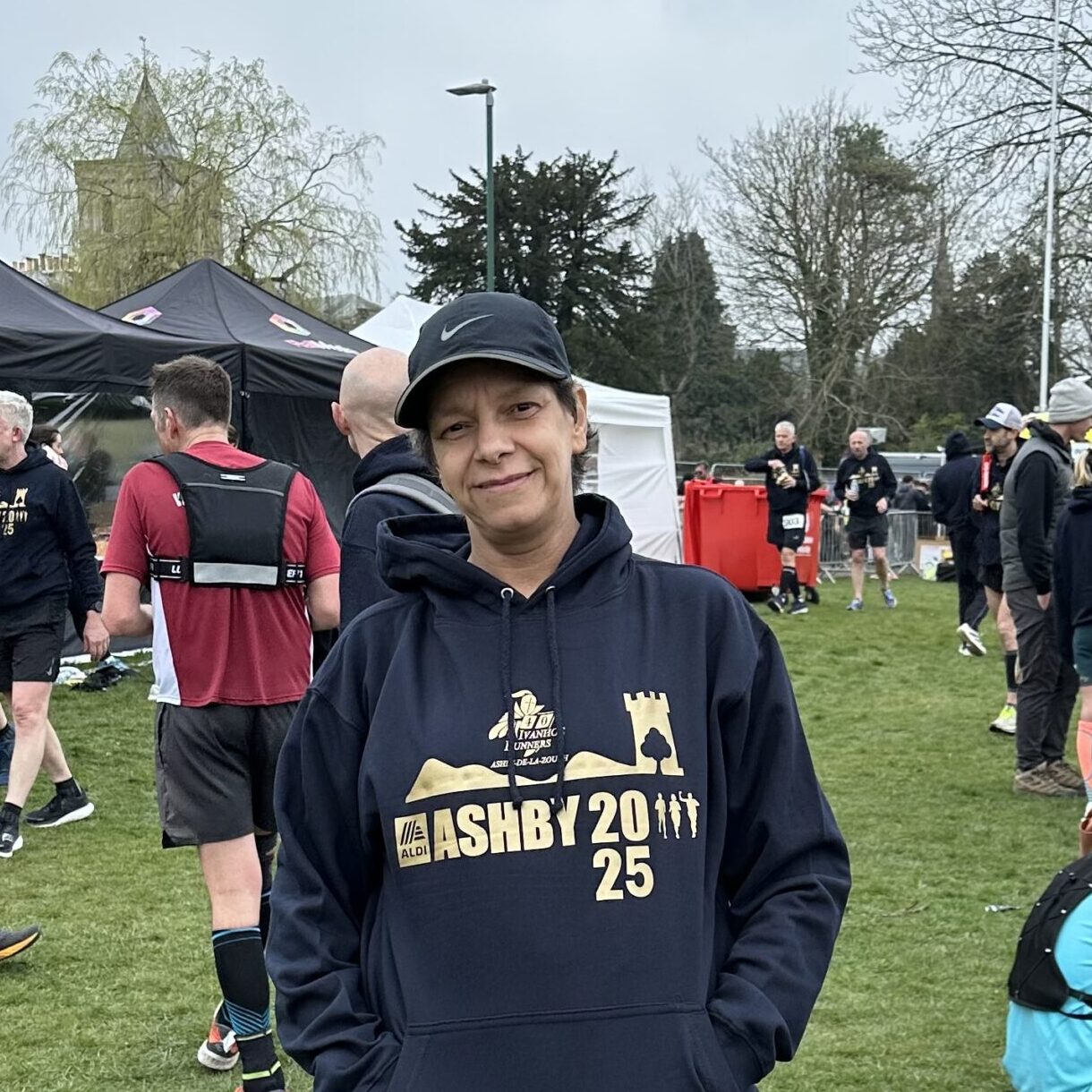
Amanda R is 54, a single mum to three children aged 15, 13 and 11, working full time and going through the menopause. On 4 October 2026 she ran the Cardiff Half Marathon in 2:06:47. Six months earlier she ran Berlin in 2:16:27, which was the fastest chip time she could find for herself.
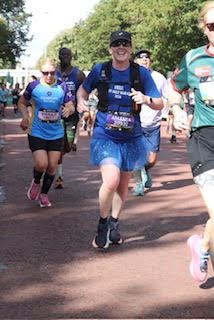
The time is not really the story. In the eleven months we have worked together she has had three separate spells where her calf, Achilles or ankle stopped her running properly. She never ran more than about 3.8 hours in a week, which is about what a full-time job and three children leave room for. And she still held about 9:40 miles for just over two hours on a hot day, ran the Roath hill strongly, and finished faster than she started.
Every session had to earn its place in her week. This is how we got there, including the bits that did not go to plan.
Where Amanda started
At the end of 2025 Amanda thought she might have to give up running altogether. She had just run the Cardiff and Valencia half marathons with really bad Achilles tendonitis in both ankles. She came to me in November 2025 with Berlin Half in the diary for March, and her runs at that point were two to three miles.
So we started small. A 20 minute recovery run, an easy run with a few strides, one easy run of about three miles and a swim. Nothing that would impress anyone on Strava.
By mid January her long run was 7.5 miles, she had done her first tempo and threshold sessions, and the Achilles had settled. I signed off the base phase and gave her a recovery week. Then her left calf and Achilles flared up.
Three setbacks
Amanda’s own view of the early setbacks is blunter than mine. She puts them down to not doing what I told her, and says that as soon as she toed the line, things started clicking.
Winter – calf and Achilles. From late January through February her running dropped to 20 to 28 minute test runs. The actual training was on the bike, the elliptical and in the pool. I told her at the time that keeping her effort very easy was not lost fitness, it was the fastest way back. We also looked at sleep, which was sitting at 6 to 6.5 hours, not much for someone working full time and raising three children, and was getting in the way of healing.
In March we rebuilt with run/walk: run 5 minutes and walk 1, then 6 and 1, then 9 and 1, then a 5.5 mile long run. She got round Berlin in 2:16:27 on that. Her note beforehand was that she would “defo get round” and was focused on “not breaking myself” so she could build to Cardiff. That was exactly the right way to think about it.
Spring – ankle. After Berlin and a 10k in Newport the ankle became the problem. Her recovery numbers were telling the same story as the ankle, and she had a cold on top. Her own summary that week was more direct than mine. So we took nearly all the impact out for five weeks – walking, cycling, swimming, strength work – and she kept turning up for physio and the gym.
A parkrun on 9 May showed we were not there yet. The inside of her left ankle ached and, in her words, “niggled all the way round”. We went back to cross-training, she ran Barry Island 10k as a check (a bit harder than I had in mind, with a head cold and a sharp twinge at 4.5 miles), we followed it with two more weeks off running, and I started a new plan from 1 June aimed at Cardiff.
Autumn – the warning signs. On 13 September, three weeks out, she mentioned the back of her left Achilles had ached at the start of a long run and then eased. That is a classic early warning. We did not stop, but that week became run/walk and a bike ride before Castle to Castle. It was meant to be a fun run. She ran the 10.4 miles getting quicker every mile, which is very Amanda, and came through it fine.
A week later her calf felt tight after a hilly long run. We dropped the gym and the swim for the taper and kept the last week very light. On race day: “Nothing from the calf.”
The build to Cardiff
June started with two 24 minute run/walk tests and one week scheduled at a time. I only planned the next week once I had seen how the ankle behaved. The summer 10k races were planned as controlled aerobic efforts. Amanda is competitive once she has a number on, so that is not quite how they went. At Porthcawl in July she went under the hour and told me “I hated every step… but that’s obvs because I was pushing myself”. My job after that was simple: two days off running and a light week.
By 19 June her check-in said the ankle “seems to be behaving”. In July I started trading cross-training for running. In August she did a three week build with tempo work and runs up to 65 minutes, and her parkrun dropped under 29 minutes.
Summer was not tidy either. On top of work and the children there was a stomach bug, a holiday, a head cold and a fall. None of it derailed the block, because nothing in the plan depended on one perfect week.
On 6 September she ran the Cardiff 10k in 57:59, nearly eight minutes faster than Barry in May. Two days later she wrote: “I don’t want to jeopardise how far I’ve come… I was SO pleased with that 10km.” The peak weeks were about 3.8 hours of running plus an hour or so of swimming or cycling.
Race day and the numbers
It was hot and the hills did their job. Amanda’s verdict afterwards: “The hills were an absolute killer and the heat totally sapped me. My inner dialogue was interesting to say the least lol but that’s the bit I like… the mental challenge.”
| Date | Race | Time |
|---|---|---|
| 29 Mar 2026 | Berlin Half Marathon | 2:16:27 |
| 17 May 2026 | Barry Island 10k | 1:05:37 |
| 28 Jun 2026 | Keeper of the Colliery 10k | 1:06:22 |
| 5 Jul 2026 | Porthcawl 10k | 58:36 |
| 6 Sep 2026 | Cardiff 10k | 57:59 |
| 20 Sep 2026 | Castle to Castle, 10.4 miles | 1:43:18 |
| 4 Oct 2026 | Cardiff Half Marathon | 2:06:47 |
Berlin and Cardiff are chip times. The other times are from her watch.
Why it worked
- She told me early. Every flare-up in this story started as one line in a comment or a check-in: a bit sore after, ached to start, slightly tight. The plan changed the same day. Small adjustments made early are why September cost her two easy days and not six weeks.
- Cross-training counted as training. When running had to come down, the bike, pool and elliptical went up. Her fitness numbers in late April were slightly higher than in mid January, with a layoff in between.
- Test before you commit. Every return began with short run/walk tests and one week of plan at a time.
- The whole picture, not just the sore bit. Her weekly check-in covers sleep, stress, resting heart rate and how heavy her footstrike feels. Those shaped the load as much as the ankle did. She filled it in 31 times out of 32.
- Not much running, done consistently. From June to October there was not a single week without a run, and not a single big one. For a single mum working full time, that was the version of training that could actually survive her week.
- Strength work stayed in. It ran all year and only came out in race week.
If you are over 50, juggling work, family and the menopause, keep getting the same niggle, and assume a personal best is behind you, this is the bit worth noticing. Amanda did not get faster by doing more. She got faster by losing fewer weeks.
In her words
When I came to you I had just run Cardiff and Valencia halfs with really bad Achilles tendonitis in both ankles and you put me back together. You were always there to discuss issues and prop me up when I got down and explain to me how it was all about consistency. I also now completely get that you ‘run slow to run faster’, which took an age for me to get my head around. I also know it’s OK to drop a session if my body isn’t up to it… lots of lessons learnt. At the end of last year I thought I may have to give up running altogether and then look what this year has been like!
Amanda R
Next for her: Valencia Half Marathon on 25 October, then Rome Marathon in March 2027.
Coming back from Achilles, calf or ankle trouble, or fitting training around a full life? Book a free call and we will talk through your goals, or see how coaching works and what it costs.