

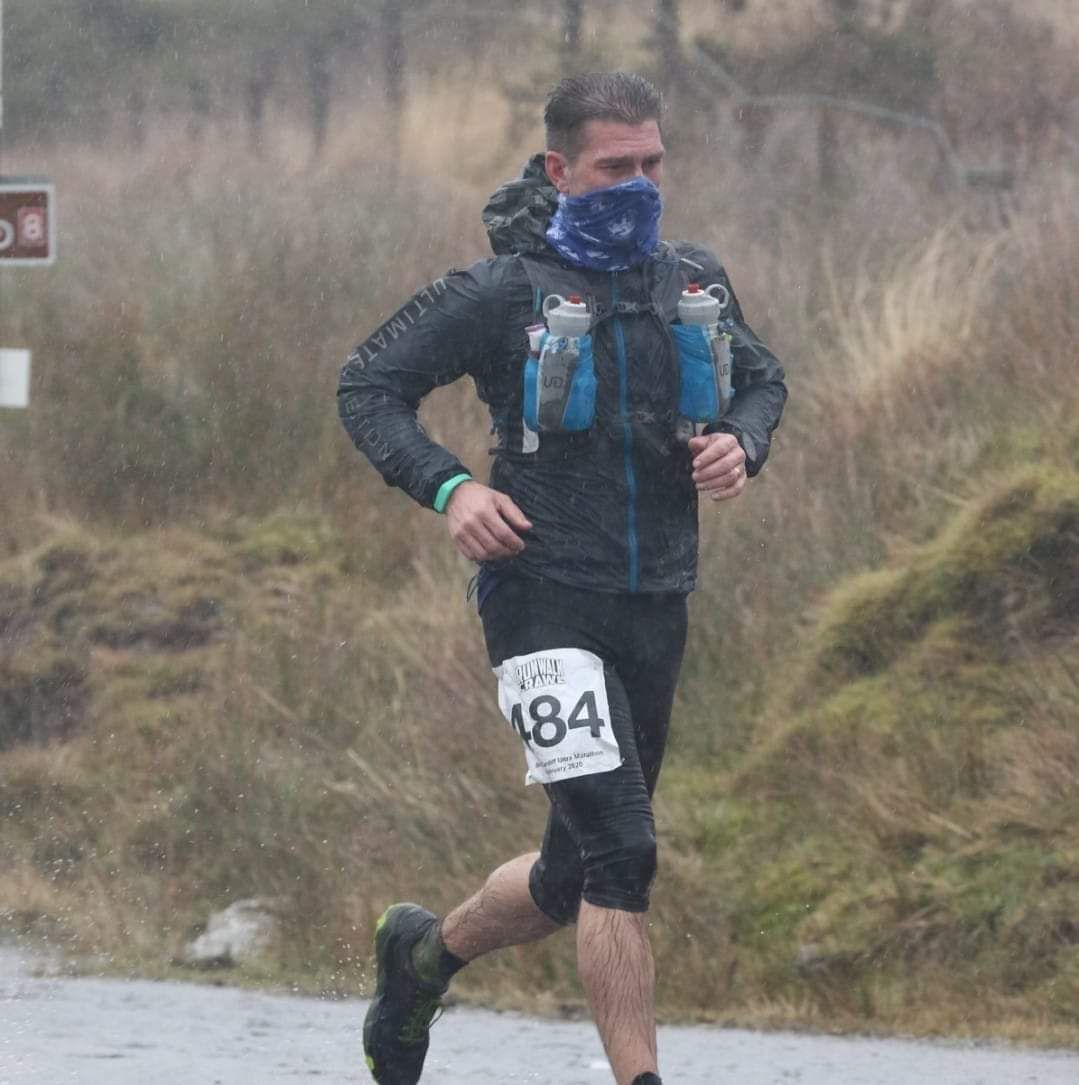
The Brecon to Cardiff Ultra can look deceptively runnable on paper. The danger is treating the flatter sections as an invitation to push: start too hard and you may feel the cost by the time you reach Merthyr.
Short version: Train to hold a controlled effort on firm, flat ground, not to chase a fast early pace. Use heart rate and breathing as guides, practise steady running on tarmac during longer sessions, and arrive at Merthyr with enough in your legs to keep moving well.
The course in brief
The Brecon to Cardiff Classic takes place on Sunday 14 February 2027. It is a 43-mile point-to-point race from Brecon to Nantgarw, following the Taff Trail for much of the way.
- The opening section follows a flat canal path.
- The route then climbs gradually towards Torpantau, its high point.
- After that, it trends downhill, with no steep climbs or descents.
- The surface changes along the route. The section after Merthyr is mostly tarmac cycle path.
- The organiser lists a 14-hour time limit and provides five checkpoints.
“Runnable” does not mean “easy to run hard”. A long, steady climb still asks your legs to do work, and a flat path invites you to run quicker than the day allows. It feels easy in the first mile, and your legs send the bill somewhere after Merthyr.
Check the organiser’s Brecon to Cardiff Classic 2027 information for the latest course, kit and travel details.
The trap: flat ground feels cheaper than it is
On a steep trail, the terrain often makes you slow down. On a level path, there is less to stop you accelerating. You feel fresh, your stride opens up, and your watch starts showing numbers you would be pleased with in a shorter race.
That can be a problem later.
The opening miles are not a place to prove your fitness. If you run them too hard, the cost may show up later as heavy legs, a rising heart rate or a shuffle on the gradual climb towards Merthyr. The time you thought you were gaining has come from the energy you needed to keep moving.
Treat the early flat as a pacing test, not a chance to bank time. You should be able to speak in short sentences and feel that you are holding something back. If your breathing is already strained, ease off before fatigue forces you to.

Use effort first, pace second
Pace is useful on a flat route, but it is not a hard rule. Wind, rain, surface conditions, fatigue and how well you have recovered can all change what a given pace costs you.
Try this simple hierarchy:
- Start with breathing and feel. Keep the opening effort comfortable and controlled.
- Use heart rate as a guide. If you know your personal training zones, set an early ceiling rather than chasing a precise number. Heart rate can drift during a long run, so read it alongside how you feel.
- Check pace as feedback. Notice what pace comes naturally at that effort. Don’t force the pace to match a target if your breathing or legs say otherwise.
A Coros watch or another reliable running watch can help you see trends, but the display is only one piece of information. If the numbers and your body disagree, respond to the whole picture, not one reading.
Train for the course, not just the distance
The Brecon to Cardiff route asks for endurance, but it also asks you to keep a steady rhythm on firm ground when you are tired. Include different surfaces in your build: paths, gravel and tarmac, as well as gradual uphill running and purposeful walking.
For an ultra, long runs are a normal part of preparation. They routinely exceed 2.5 hours during an ultra block. There is no universal time limit that makes a long run useful or safe: build towards longer sessions progressively, give each one a clear purpose, and allow enough recovery to absorb the load.
A useful long-run session might include:
- Easy running at a conversational effort for most of the outing.
- A section on tarmac or a firm cycle path, practising relaxed, economical form.
- A controlled steady block on flatter ground, if your training history and recovery support it.
- Planned walk breaks, especially on a gradual climb, rather than waiting until you are tired.
- Practising how you will eat and drink while moving.
You can also include short sections around your current marathon pace in selected longer runs to rehearse a consistent flat-ground rhythm. This is not a suggestion to run the whole long session at marathon pace. Keep those blocks controlled and brief enough to suit your ability, then return to easy running. If marathon pace feels like a hard effort that day, slow down. The purpose is to practise smooth movement, not to turn every long run into a race.

Make the progression fit you
Don’t increase your long-run duration, weekly mileage and faster running all at once. Choose the main training stress for a given week, then see how you recover before adding more.
A steady build could include:
- Regular easy running to develop consistency.
- One long run with a specific purpose, such as time on feet or flat-surface practice.
- A separate quality session only if you are recovering well.
- A lighter week when fatigue is accumulating or life is already demanding.
A missed session does not need to be squeezed into the next day. Work stress, poor sleep and family demands affect how much training you can absorb. Adjust the week rather than forcing the original plan regardless of how you feel. Progress comes from training you can repeat, not from winning one hard Tuesday.
Practise holding back before Merthyr
The section around Merthyr is a useful mental marker. If you arrive there already pushing hard, you have made the later task harder. If you arrive with steady movement and fuel in the tank, you have options.
In training, rehearse checking in with yourself every so often:
- Is my breathing still controlled?
- Am I eating and drinking as planned?
- Have I started to tense my shoulders or overstride?
- Is a niggle changing the way I move?
- Would a short walk now help me run more smoothly later?
These questions are more useful than asking whether you are “on pace” at every mile. You are managing the whole day, not completing a series of isolated splits.
For more detail on timing and the event’s cut-off, read Brecon to Cardiff Classic: Can You Beat the Cut-Off?. To plan clothing for the season and changing surfaces, see February Kit for the Taff Trail: What to Wear for Mud, Cold and Rain at B2C.
A practical training checklist
Use this as a prompt while building your plan, not a rigid pass-or-fail test.
- I can run easy for a sustained period without turning every outing into a pace test.
- My long runs are building progressively and have a clear purpose.
- I have practised on firm paths or tarmac as well as softer surfaces.
- I have tried controlled, marathon-paced sections only when they suit my current fitness and recovery.
- I know how I will use heart rate and effort without becoming fixed on one watch number.
- I have practised eating and drinking during longer sessions.
- I can walk uphill with purpose and return to an easy run without a prolonged shuffle.
- My training plan leaves room to adjust when sleep, work or niggles affect recovery.
- I have checked the organiser’s latest course and compulsory-kit information.
Key takeaways
- Flat and runnable does not mean free speed. Keep the opening effort controlled.
- Train to maintain economical movement on firm ground, including when you have already been running for a while.
- Use heart rate, breathing and perceived effort together. Treat pace as feedback, not an order.
- Long runs belong in ultra preparation, but build them progressively and match them with recovery.
- Short marathon-paced sections can help rehearse steady running, but they should not turn every long run into a hard session.
This is training guidance, not medical advice. If you have persistent symptoms, a fever, chest pain or a specific health condition, consult your GP before continuing or changing your training.
If you want help building a plan around your current running, recovery and schedule, contact me through PFM Coaching.


