

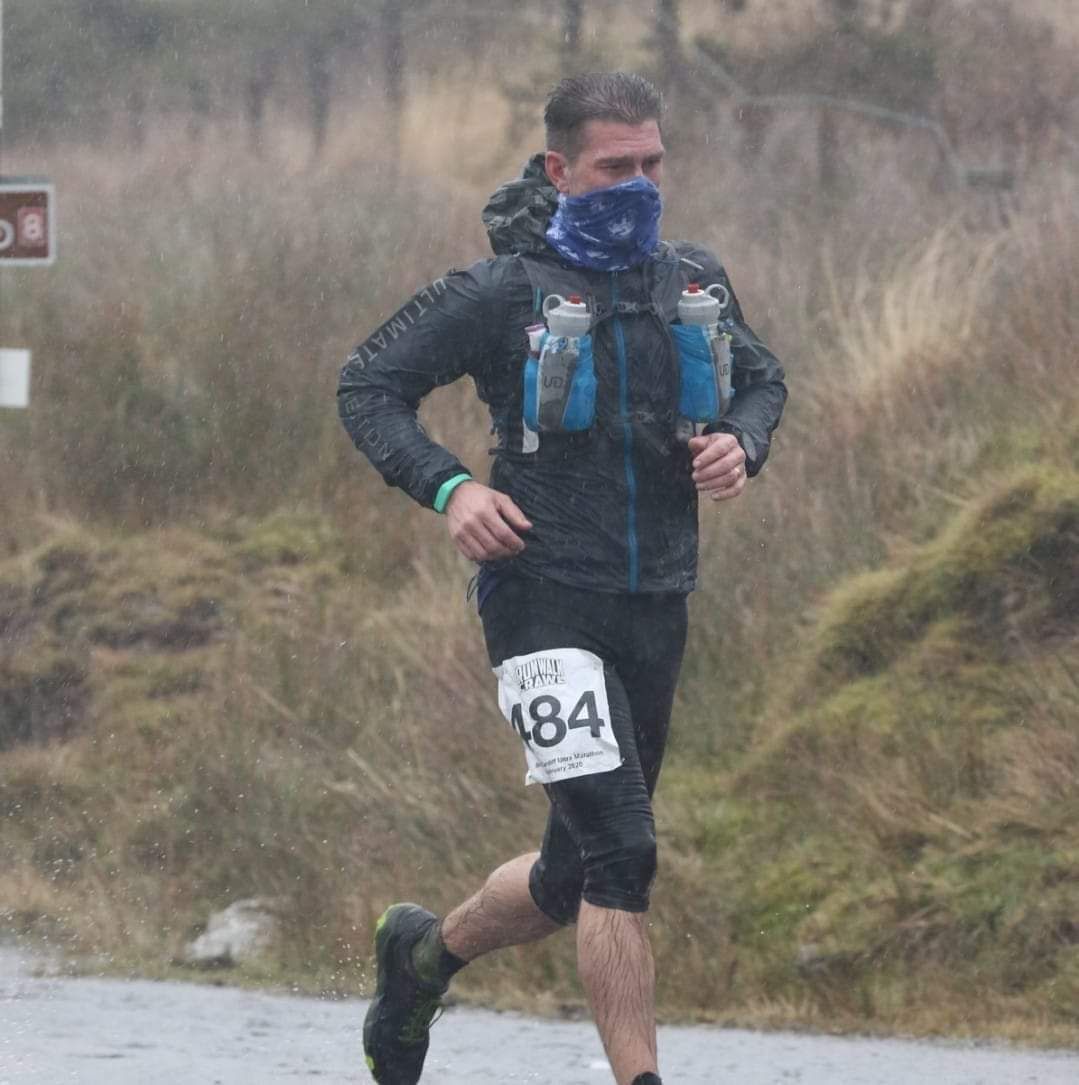
February on the Taff Trail is not the place for optimistic clothing choices. For the 43-mile Brecon to Cardiff Classic on 14 February 2027, your kit needs to handle cold, rain, mud, wind and long hours on your feet.
TL;DR
- Expect typical February temperatures of roughly 0–7°C, with rain, wind, mud and possible ice on shaded sections.
- Use a layering system: wicking base layer, warm mid-layer and waterproof-breathable outer shell.
- Wear trail shoes with reliable grip, not road shoes, and carry spare socks.
- Protect your hands, head and neck early. Cold hands affect grip, dexterity and morale.
- Carry food, fluid, a headtorch, charged phone, emergency layer, first aid and your route on a GPS device or app such as Komoot.
- Check the organiser’s official compulsory kit list before race day because requirements may change with conditions.
[Ad] Some links in this post are affiliate links, which means a purchase may earn PFM Coaching a small commission at no extra cost to you. As an Amazon Associate, I earn from qualifying purchases.
What February can feel like on the Taff Trail
The Brecon to Cardiff Classic starts at 08:00 in Brecon and follows the Taff Trail towards the finish at Nantgarw, with a 14-hour cutoff. The route begins on footpaths and forestry trails before becoming more of an off-road cycle path, mostly tarmac, from Merthyr onwards.
That change in surface is one you will notice, but it does not remove the weather problem.
A realistic February day may include:
- Temperatures between 0°C and 7°C
- Steady rain or repeated showers
- Mud on footpaths, forestry tracks and wet grass
- Strong wind on exposed sections
- Standing water and slippery surfaces
- Possible ice in shaded areas
- A finish in fading light or darkness
This is not a race-day forecast. It is a sensible planning assumption. The actual conditions will depend on the week before the event and the weather on the day.
Build your kit for the coldest, wettest part of the day, not the most comfortable hour at the start.
The layering system: warm without overheating
The mistake is either setting off underdressed or wearing every layer from the first step. Both choices can cause problems.
You want clothing that can be adjusted as your effort, the weather and your pace change.
1. Base layer: move sweat away from your skin
Wear a long-sleeved synthetic or merino base layer that fits comfortably without restricting movement.
Avoid cotton. It absorbs moisture, dries slowly and becomes cold against your skin when the temperature drops. On a long day, a wet cotton layer can turn a manageable section into a steady loss of warmth.
Your base layer should help move sweat away from your skin while still giving you enough coverage for the early morning.
2. Mid-layer: keep warmth available
Carry a warm mid-layer rather than relying only on the jacket to keep you warm. This could be a fleece, grid layer or other suitable insulating top.
The mid-layer is particularly useful:
- At the start when you are waiting around
- On slower climbs or muddy sections
- When the wind picks up
- If you become tired and your pace drops
- At checkpoints when you stop to eat or change kit
The important point is that this layer should be available in your pack. You may not need it for every mile, but you will be glad to have it if you become cold later in the day.
Carry layers you can shed into your pack. Do not dress as if the temperature will stay the same from Brecon to Nantgarw.

3. Outer layer: block rain and wind
The organiser’s compulsory kit list requires a waterproof jacket with taped seams. This is different from a thin showerproof windbreaker.
Choose an outer layer that:
- Has taped seams
- Has a hood that stays in place
- Fits over your base and mid-layer
- Allows you to move your arms freely
- Packs securely when not in use
- Provides proper protection from rain and wind
Waterproof-breathable fabric can help manage moisture, but no jacket will keep you perfectly dry if you are working hard for many hours. Your aim is not to stay perfectly dry, that's just not going to happen. Your aim is to reduce heat loss and keep the weather from becoming a serious problem.
If you are sweating heavily early in the race, adjust your layers before your clothing becomes soaked from the inside. A wet base layer can become a liability once you slow down.
Legs: simple, warm and easy to adjust
Your leg choice depends on how you respond to cold and how much protection you need from wind and rain.
Suitable options may include:
- Winter running tights
- Thermal leggings
- Running shorts with a lower-body layer carried in your pack
- Waterproof trousers when required by the compulsory kit list or forecast
The official kit list requires a lower-body base layer or running leggings, either worn or carried. Waterproof trousers with taped seams are also compulsory, so make sure you have practised putting them on over your running kit.
Do not wait until you are shivering before adding protection. Stopping in heavy rain to change layers is slower and less comfortable than making the adjustment when you first notice your legs cooling.
Feet: grip and moisture management
The first part of the Classic includes footpaths and forestry trails where mud and slippery ground are likely in February. Road shoes are a poor choice for this kind of surface.
Wear trail shoes with reliable grip. You do not necessarily need the most aggressive shoe available, but you need enough traction for:
- Wet mud
- Slippery grass
- Loose forestry surfaces
- Waterlogged paths
- Uneven ground
The later tarmac sections mean comfort also matters. A shoe that grips well but leaves your feet battered on hard surfaces will make Merthyr on feel harder than it needs to be.
Break in your chosen shoes before race day. Check for:
- Heel movement
- Pressure across the toes
- Rubbing around the ankle
- Room for your feet to swell
- Secure lacing when the shoe is wet
Socks and a change point
Choose technical running socks or a wool blend. Avoid ordinary cotton socks. The Hilly Ultra Marathon Fresh is my preferred sock for the Classic because it uses a merino wool blend for a softer feel, has zoned cushioning at the ankle and Achilles for protection on uneven trail surfaces, and medium cushioning on the key pressure zones.
Carry at least one dry spare pair, ideally in a waterproof bag. The Merthyr drop bag gives you a useful opportunity to change socks, assess your feet and decide whether a second pair of shoes would improve comfort for the remaining miles.
I wear Hilly Ultra Marathon Fresh socks (paid link), and they are what I would put in my own drop bag for this race.
Wet feet need proactive care. Moisture, grit and repeated foot movement can create hot spots that become blisters. On a 43-mile effort, small problems have a long time to develop.
Prolonged exposure to cold and wet conditions can also contribute to serious skin and circulation problems, including trench foot. This is not something to ignore. If your feet become numb, unusually pale, swollen or painful, stop, add protection and seek help from event staff.

Hands, head and neck
Cold hands early in the race can affect grip, dexterity and morale. They make zips harder to use, food more difficult to open and navigation less straightforward.
Carry:
- Lightweight or mid-weight running gloves
- A warmer or more weather-resistant spare pair
- A warm hat or buff
- An additional buff if you tend to feel the cold around your neck
The compulsory kit list includes gloves and a warm hat or buff. Do not treat these as emergency items only. Use them early if your hands or ears are cooling.
Comfort is not a luxury on a long winter event. It helps you keep making sensible decisions.
What should be in your pack?
Your pack needs to carry the required safety equipment as well as enough food and fluid for the sections between checkpoints.
Check the organiser’s current list, but plan around:
- Hydration capacity of at least 500 ml, or as required by the event
- Water or an appropriate drink mix
- Gels and chews that you have already tested
- Real food such as sandwiches, biscuits, crisps or fruit
- Waterproof jacket and trousers
- Required warm mid-layer
- Spare socks
- Gloves, hat and buff
- Headtorch with enough battery life
- Charged mobile phone
- Backup battery and charging cable
- Foil survival blanket or bivy bag
- Whistle
- Compass
- Basic first-aid kit
- Blister plasters, tape and dressings
- Emergency map
- GPS route on your watch or phone
- Some cash for emergencies
The event provides checkpoints with drinks, sweets, biscuits, sandwiches, fruit and crisps. That support is useful, but you should still carry food that you know you can tolerate.

Food and drink in cold weather
Cold weather can reduce your sense of thirst, but you still need to drink consistently. Do not wait until your mouth is dry or your energy has dropped.
Practise with different gels and chews during training, alongside real food if that suits you better. A long event can create taste fatigue, so having a mixture of sweet and savoury options is sensible.
Keep food accessible. If it is buried at the bottom of your pack or difficult to open with cold hands, you are less likely to use it regularly.
Your fuelling plan does not need to be complicated. It needs to be tested, available and realistic for your pace.
Navigation and darkness
The Classic route is marked, but every competitor must carry a device with the GPS route loaded. Download the route before race day and check that it is available offline.
You can load it on:
- A GPS running watch such as a Coros watch
- A mobile phone running Komoot or another suitable navigation app
- A handheld GPS device
Carry your phone in a waterproof pouch and protect the battery from unnecessary cold and moisture. A power bank is sensible if you expect to be close to the 22:00 cutoff.
You also need a reliable headtorch. February daylight is limited, and delays from mud, weather, foot care or fatigue can push the final section into darkness. Check the batteries before travelling and carry spares or a backup light if your expected finish time makes that sensible.
Practise the system, not just the distance
Do not wait until race morning to discover that your jacket rubs under your pack or that your gloves make it impossible to use your phone.
Use winter training runs to practise:
- Wearing your full pack.
- Adjusting layers while moving.
- Eating with cold or wet hands.
- Changing socks quickly.
- Using your headtorch.
- Following a route on your watch or phone.
- Moving between trail shoes and road shoes if you plan to use the Merthyr drop bag.
Use your long runs to rehearse fuelling, clothing, foot care and decision-making while tired.
The aim is a kit system that keeps working when your attention narrows and your pace slows.
Key takeaways
- Plan for cold, rain, mud, wind and possible ice.
- Use a wicking base layer, warm mid-layer and waterproof-breathable outer layer.
- Carry spare clothing rather than wearing everything from the start.
- Choose trail shoes with grip and practise in wet conditions.
- Change wet socks before a small foot problem becomes a large one.
- Keep gloves, a hat and buff easy to reach.
- Carry tested food, enough fluid and the full compulsory kit.
- Load the Classic route onto your GPS device or Komoot before race day.
- Check the official event information again nearer to 14 February 2027.
The right kit will not remove the weather, mud or distance. It will give you better options when conditions change.
Kit is only part of the preparation. My free Brecon to Cardiff Ultra Playbook covers the course segment by segment, a pacing strategy for the climb and the tarmac finish, and a 16-week training framework.
If you want help preparing your training, kit and pacing around the demands of the Brecon to Cardiff Classic, contact PFM Coaching. I can help you build a plan around your current ability, schedule and recovery needs.


