

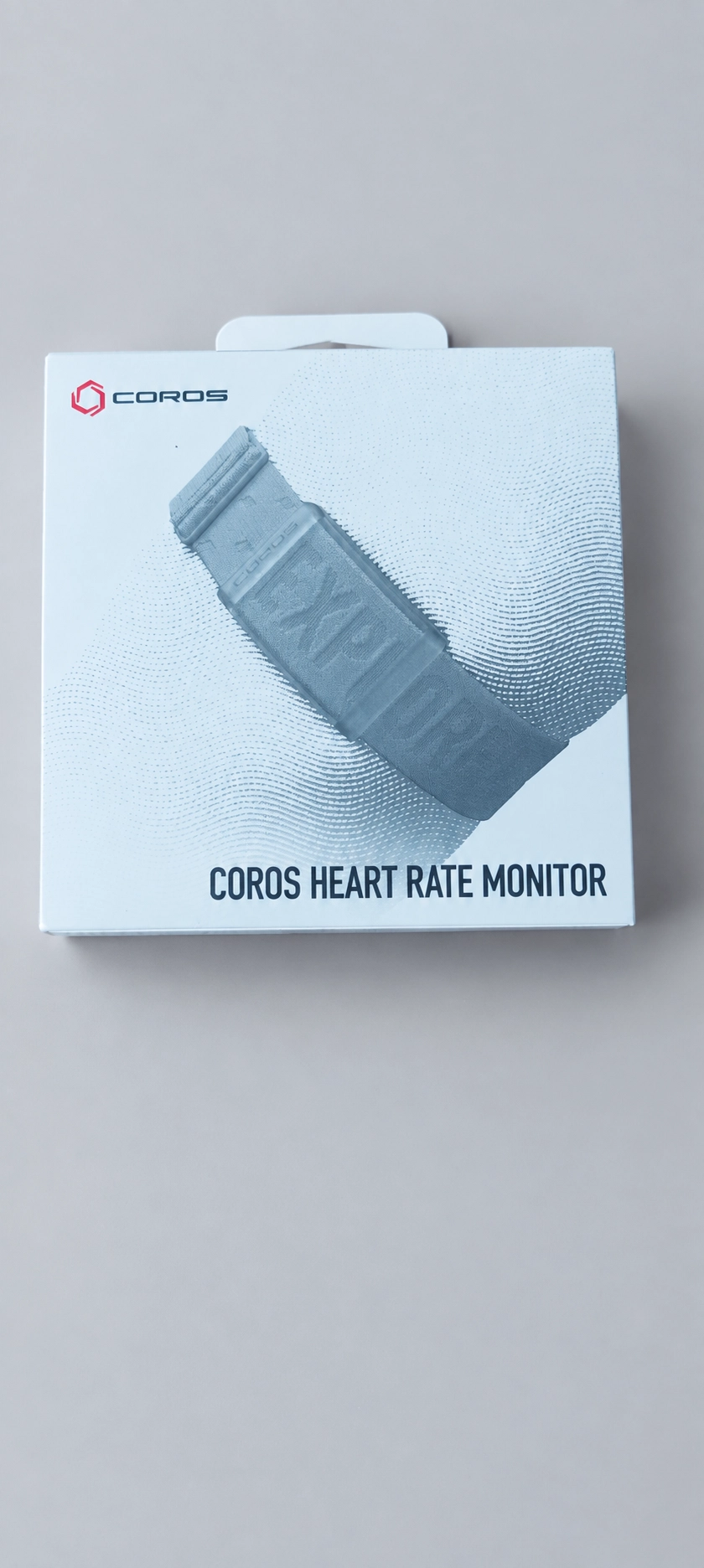
For the past few weeks, I have been part of the pre-release testing team for Coros’ new arm-worn heart rate monitor. It has now been released, so this is a quick summary of my findings after several weeks of use.
For full disclosure, this monitor was sent to me by Coros, and in return for testing it and providing feedback I get to keep the device.
Headline facts
- Device: Coros Heart Rate Monitor
- Compared against: Polar H10 chest strap and wrist-based heart rate from a Coros Vertix 2
- Testing period: Around three weeks at the time of writing
- Battery after three weeks: Near 50% remaining
- Weather tested: Torrential rain through to unusually hot weather
- Cold weather tested: No
How I tested it
I tested the Coros HR monitor while using a Coros Vertix 2 running Coros beta software. This allowed me to compare three heart rate sources during the same sessions:
- The Coros arm-worn monitor
- A reasonably new Polar H10 chest strap with new batteries, connected via Bluetooth
- The wrist-based heart rate readings from the Vertix 2

I used the armband for gentle plods, steady tempo sessions, intervals and short hill sprints. The runs took place in everything from torrential rain to unusually hot weather.
I have not had the opportunity to test it in cold conditions yet, so I cannot comment on how it performs when the temperature drops properly.
The purpose of testing three sources at once was simple. Heart rate monitors can all produce the occasional odd reading, and it is not always obvious which device is at fault. By comparing the armband, chest strap and watch together, I had a better chance of spotting any consistent problems.
Charging and connection
The monitor is rechargeable using the supplied magnetic charging cable. The magnet is very strong, so there is very little prospect of it accidentally disconnecting while charging. It also charges quickly.

Once charged, it connected seamlessly to my Vertix 2 using the QR code from within the Coros app. After that initial connection, the monitor automatically connected to the watch whenever I placed it on my arm.
The monitor detects when it is being worn and turns itself on and off automatically. This meant it was ready to go before the Polar H10 on most occasions, which was useful when I was trying to get out of the door without turning the whole process into a technical demonstration.
I did have one minor issue. If I stood still for too long while waiting for the Vertix 2 to pick up GPS, the Coros armband would turn itself off. Simply moving it around until it turned back on solved the problem.
That behaviour is also part of the benefit of the system. The monitor is not constantly running when it is not being worn, helping to preserve battery life. After around three weeks, I had not needed to recharge it and the battery was still near 50 per cent.
The battery percentage is displayed within the Coros app, so I did not have to guess how much charge was left.
Comfort and fit
It took me a little while to get used to putting the monitor on my arm. This was not because of any design problem. I have the coordination of Mr Bean and kept snagging it on my watch or pinging my arm when it slipped out of my hand.
I soon got over that.
The monitor has an adjustable strap and a Velcro fastening which is strong and secure. In practice, I did not really use the Velcro. I found it easier to slide the armband up my arm with it already secured.

Once in position, it stays securely in place and is very comfortable. After a few minutes, I forgot I was wearing it.
I cannot say that for any of the chest strap monitors I have used.
Chest straps are not necessarily uncomfortable for everyone, but I have never particularly enjoyed wearing them. They can move, dig in or simply become something else to think about during a run. The Coros armband removed that distraction for me.
It also stayed in place during faster running, hill sprints and wet-weather sessions. I did not need to keep checking whether it had moved.
Accuracy compared with a chest strap
Across all the runs, the Coros armband readings, the Vertix 2 readings and the Polar H10 readings were within a few beats of each other.
That was the main thing I wanted to see.
During the gentle runs and steady tempo sessions, the three readings tracked closely. The same was true during the intervals, apart from a short period immediately after some hard efforts.
The only notable drift happened during the hill sprints, or for around 30 seconds after intervals, when the Polar H10 was way off.
I am satisfied that the Polar H10 was producing the inaccurate readings rather than the Coros armband. Immediately after the hard efforts, the Polar showed very low heart rates. This suggested that it had stopped increasing at some point during the effort, rather than accurately recording the high heart rate and then recovering quickly.
The Vertix 2 and the Coros armband matched almost exactly.
When I repositioned the Polar H10, its readings jumped up to match the other two monitors. That confirmed what I suspected: the chest strap had lost a reliable connection with my skin during the effort.

I had no issues at all with the Coros armband during these sessions.
For anyone using heart rate to guide training, this is important. A monitor does not need to produce a perfect number every second to be useful, but it does need to behave consistently enough that you can trust the information. Based on this testing, the Coros armband did that.
Key takeaways
- It connected quickly and automatically after the initial setup.
- The wear detection worked well and helped preserve battery life.
- It stayed secure during easy running, intervals and hill sprints.
- It was significantly more comfortable than the chest straps I have used.
- Its readings matched the Vertix 2 and usually matched the Polar H10 closely.
- The battery was still near 50 per cent after around three weeks.
- I have not tested it in cold weather yet.

Verdict so far
Based on my limited use so far, the Coros Heart Rate Monitor is accurate, reliable and easy to use.
The biggest advantage for me is comfort. I have worn plenty of chest strap monitors over the years, and none has been as easy to forget about as this armband. Once it was in place, I could get on with the run without thinking about it.
I also have not noticed any extra battery drain on the Vertix 2 compared with using the watch’s wrist-based heart rate monitor on its own.
At this stage, I will be using the Coros armband as my primary choice.
That conclusion is based on my testing rather than a long-term ownership claim. I have only used it for a few weeks, and I still need to see how it performs over longer runs and across different weather conditions. However, the early signs are good, and it has already replaced the chest strap for my normal training.
What I will update next
This is the quick version rather than a full long-term review.

I will likely update the post after I have used the monitor more, particularly on longer runs. Shorter sessions have given me a useful first impression, but longer outings create more opportunities for movement, sweat, battery drain and general equipment irritation.
Those are the conditions where small design problems tend to show themselves.
For now, the Coros HR monitor has been comfortable, simple to operate and consistent when compared with the other heart rate sources I was using.
If you have any questions about the Coros HR monitor, leave them in the comments and I will consider them as testing continues.


